


Precision Flatness Measurement – Key to Reliability
Surface flatness is one of the most important parameters in many industries. The precision of assembly, the quality of production and the reliability of machine operation depend on it.
Our company offers advanced flatness measurement services, providing full control over key elements of your production process.
Definition of flatness
Flatness refers to the geometric feature of a surface where all its elements are in a single plane. It can be described quantitatively by the deviation from perfect flatness (e.g., as the difference between the nearest parallel planes or by the method of least squares).
Industrial applications
Flatness is critical in the production of precision parts, especially where surface integrity is required (e.g., for liquids or gases). Such surfaces are usually machined, and their control (measurement) helps achieve the required quality standards.
Why is flatness measurement so important?
Flatness measurement allows you to determine whether the surface is perfectly even and meets technical requirements. Even the smallest deviations can result:
- Problematic assembly of Precision components,
- Uneven operation of machinery,
- Lower quality of final products,
- Accelerated wear and tear of mating parts.
What areas do we measure?
🔧 Tellsassembly surfaces
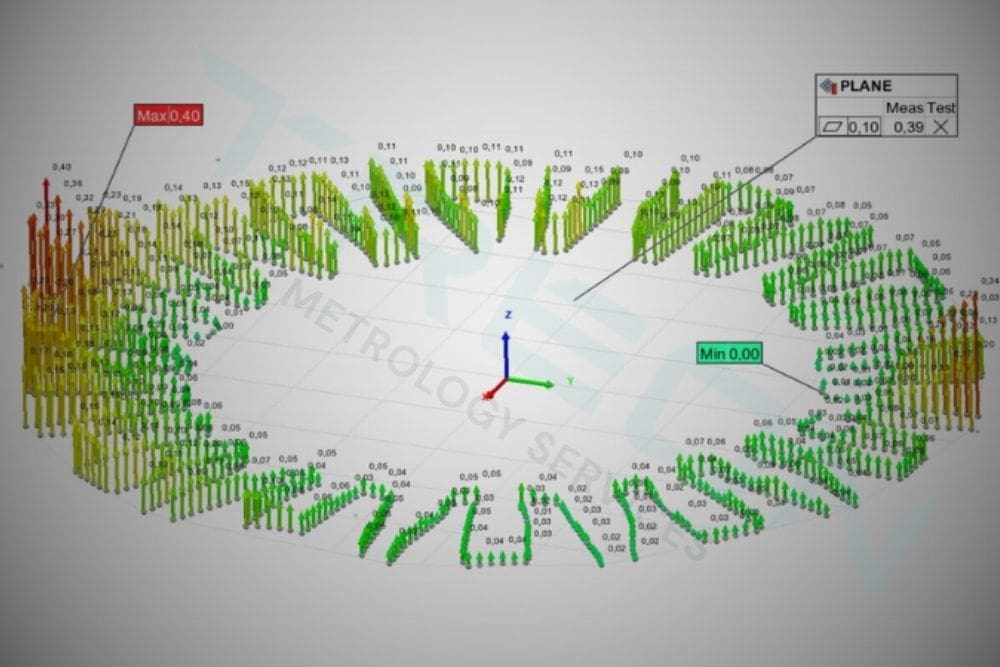
Uneven surfaces can cause installation difficulties and affect the durability of components. Precision flatness measurement ensures perfect fit and reliability.
Examples: checking the flatness of large flanges before final assembly
🔧 Working planes of machines
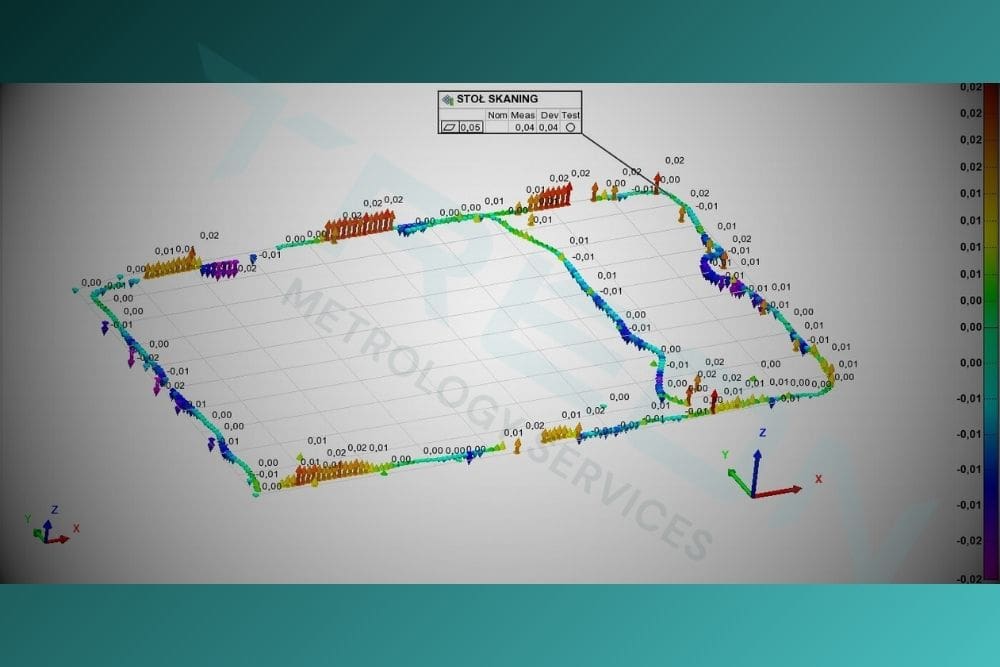 When it comes to machine tool tables, injection molding machines or presses, a level working surface is the basis for productivity and precision. With our measurements, you gain the assurance that your machines are operating optimally.
Examples: checking the flatness of the working table of a high-speed press and establishing the bases for assembly
🔧 Machined surfaces
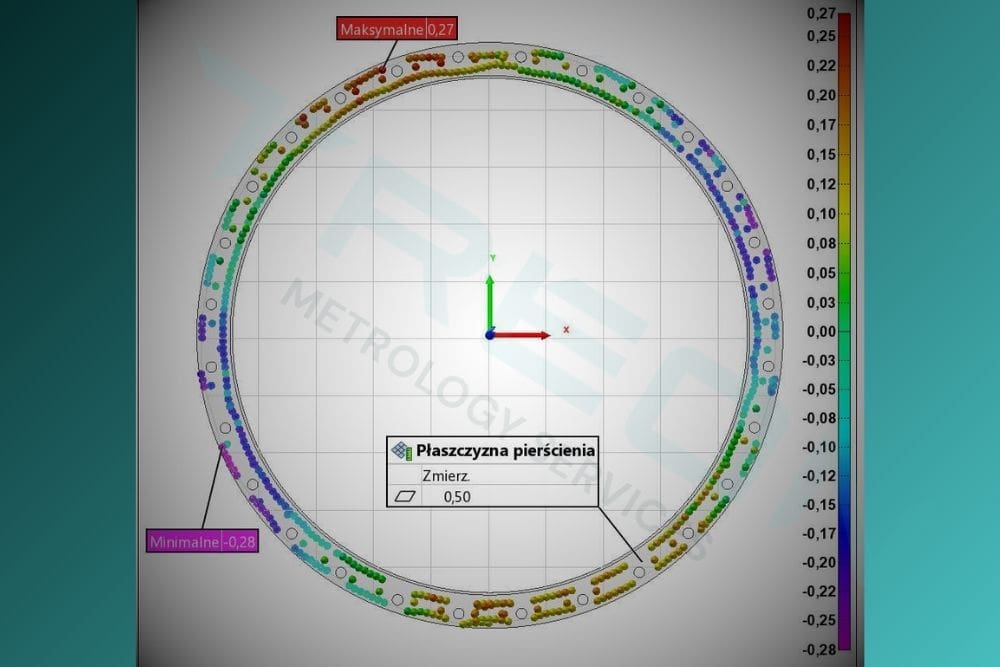 During milling, turning or other machining processes, flatness directly affects the quality of the product finish. Checking flatness avoids costly corrections.
Examples: checking the flatness of large flanges in the petrochemical industry – an incorrect flange shape can cause leaks in the system.
How do we do it?
We use modern measurement tools such as:
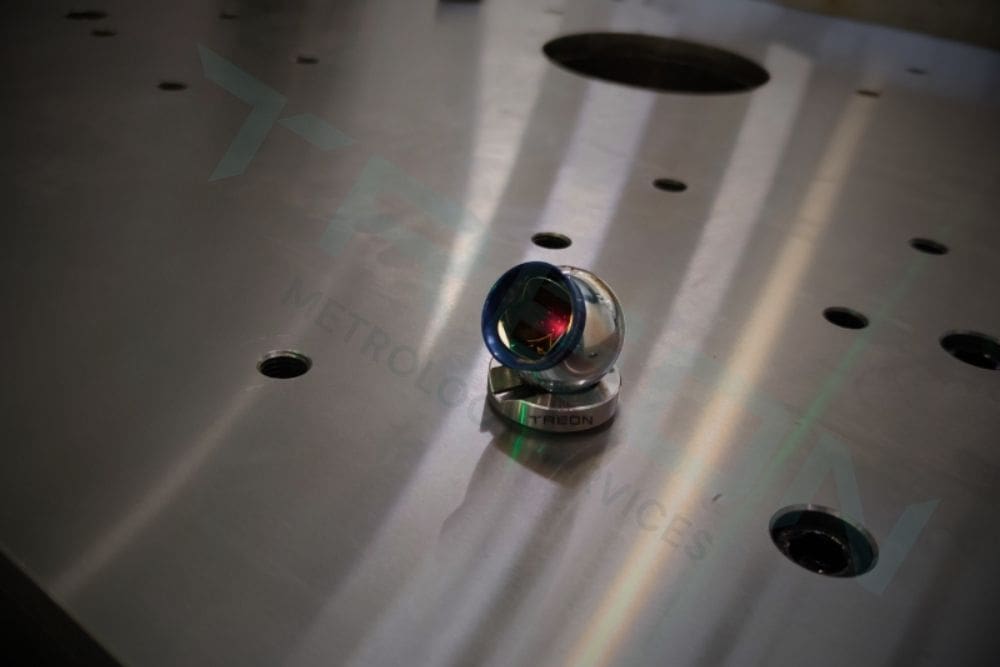
- Laser tracker – guaranteeing the highest measurement accuracy,
- Measuring arms – enabling measurement even in hard-to-reach places
We present measurement results in easy-to-read reports that facilitate analysis and decision-making.
Benefits of working with us
✔ Precision – our measurements minimize the risk of errors.
✔ Experience – we perform services in difficult conditions.
✔ Process optimization – we will detect and diagnose problems.
Ensure the reliability of your machines and the quality of your products with our flatness measurement services. Contact us today and gain a competitive edge!
contact us HERE.