


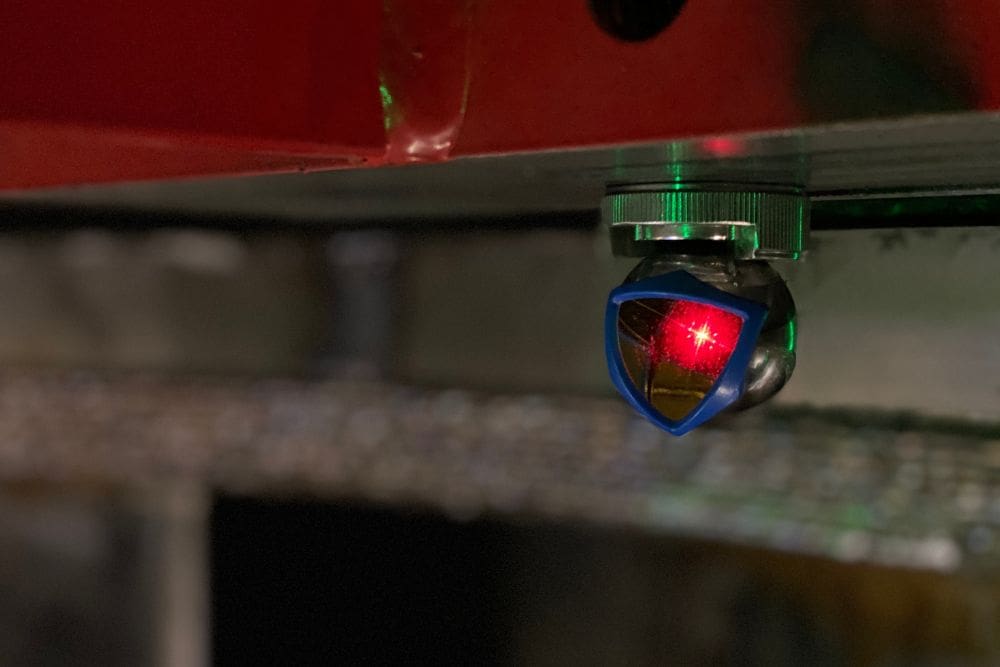
What are SMR probes? (Spherically Mounted Retroreflector)
Spherically Mounted Retroreflectors (SMRs) are key components in precision laser tracker measurements. Their main function is to accurately reflect the laser beam back to the measurement device, enabling accurate determination of the spatial coordinates of the objects being measured.
Design and principle of operation of SMR
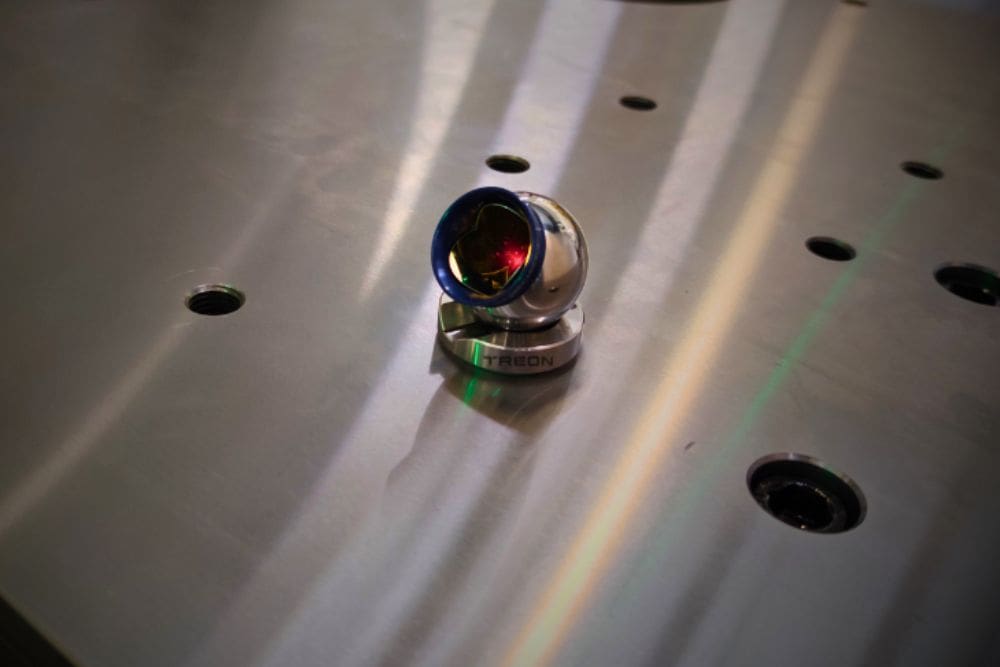
Spherical SMR probes consist of three main components:
- Corner retroreflector (angle prism) – This is a key optical component that reflects the laser beam in the exact direction from which it comes. This allows the laser tracker to accurately determine the position of the SMR in space.
- Spherical housing – Made of materials such as stainless steel or ceramic, it is designed to protect the optics and ensure precise seating of the retroreflector.

Types of SMRs
Various SMR variants are available on the market, differing in both materials of construction and precision of operation:
- Standard SMR – Traditional solutions with a glass prism embedded in a metal housing. They offer high precision (up to 2.5 micrometers), but are more susceptible to damage.
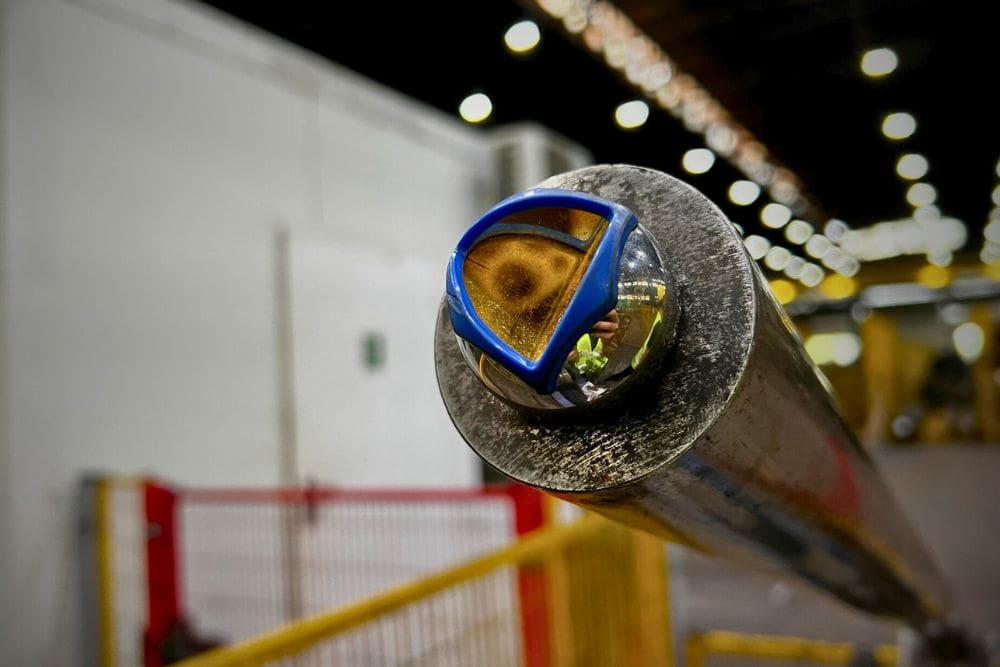
- Reinforced SMR (Break Resistant SMR) – Models with greater mechanical resistance, using a one-piece retroreflector to eliminate the risk of damage from falls.
- High-Durability SMR (Solid SMR) – Made entirely from a single piece of metal, they provide superior durability and stability even in harsh conditions.
Key technical parameters
SMRs are designed for the highest possible accuracy, and their parameters vary depending on the application. Here are the most important ones:
- Sphere diameter – The most common diameters are 0.5″, 0.875″, 1.5″. The choice depends on the requirements for the adapters used, the available space for measurement and the working conditions. Spheres of such spheres are made with an accuracy of 0.004 mm
- Diameter accuracy – The manufacturing accuracy of the diameter (radius) of the sphere itself is also very important. With brand-name products, this is usually a level of no more than 1.0025 of the nominal value. For 1.5″ (38.1mm, this is a manufacturing precision of 0.05mm on the radius.
- Retroreflector seating accuracy – Standard SMRs have a seating accuracy relative to the sphere of 0.007 mm – 0.010 mm, in more advanced types the SMR can be seated up to 4 times more accurately (0.0025 mm).
- Retroreflector material – Standard models use optical glass, while solid versions use metal or gold-coated composite materials.
- Damage resistance – Reinforced models can withstand falls of several meters without losing precision of operation. However, glass SMRs are damaged when dropped from low heights.
Choosing the right SMR
Choosing the right type of SMR depends on the specific application and operating conditions. In environments where there is a risk of falling or damaging equipment, it is worth considering reinforced or robust SMRs. On the other hand, in applications requiring the utmost precision, standard SMRs may be sufficient, provided proper care is taken in their use.
In summary, spherical SMR probes are an indispensable part of modern measurement systems, providing high precision and reliability in a variety of industrial applications.