


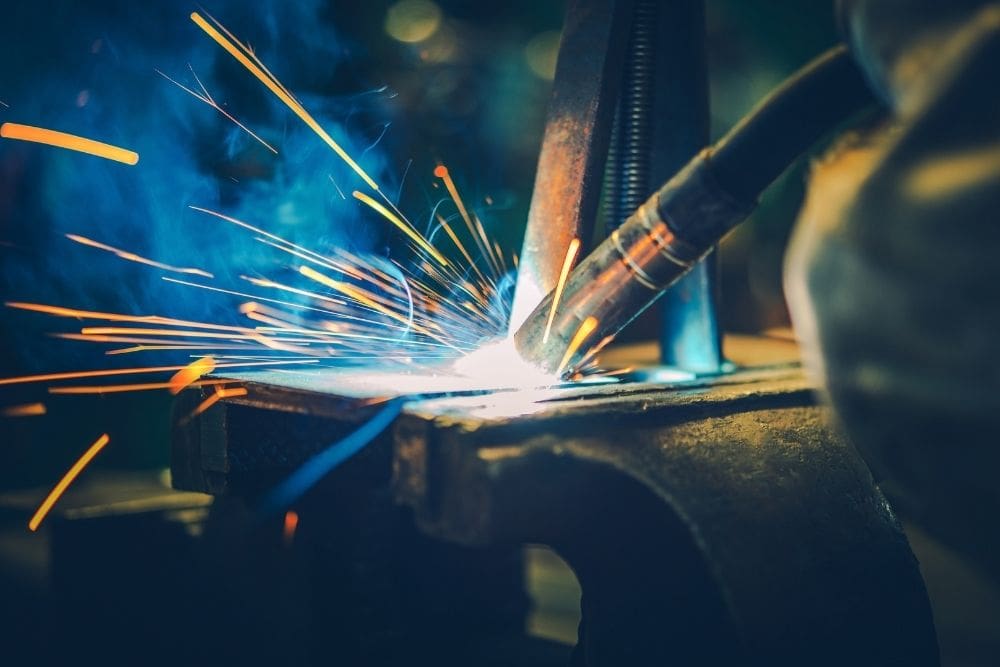
Setting up the welding jig – a guarantee of quality
In manufacturing processes where welding plays a key role, the accuracy of the positioning of welding instruments has a direct impact on the quality of the final products. These jigs are responsible for stabilizing and precisely positioning parts during welding, so every millimeter and even fractions of a millimeter matter.
What are welding fixtures (jigs)?
These are specialized devices or sets of mechanisms designed to:
-
determine the position of the elements in relation to each other,
-
Ensure stability throughout the welding process,
-
enable fast and precise fastening and removal of workpieces.
Types of welding fixtures used in industry
Depending on the design, chucks can be simple (such as in the form of jaws or vices) or very complex – with adjustable arms, hydraulic, pneumatic or electric drives. Types of chucks:
-
Manual – manually operated,
used for small batches or simple parts. -
Semi-automatic – equipped with support mechanisms (e.g. springs, levers),
to facilitate rapid positioning. -
Automatic – integrated with welding robots,
enable fully repeatable production. -
Swivel and tilt – allow you to position the item at the optimal angle.
-
Special multi-position jigs – used for complex structures,
such as car frames, tanks or steel structures.
How did the task proceed?
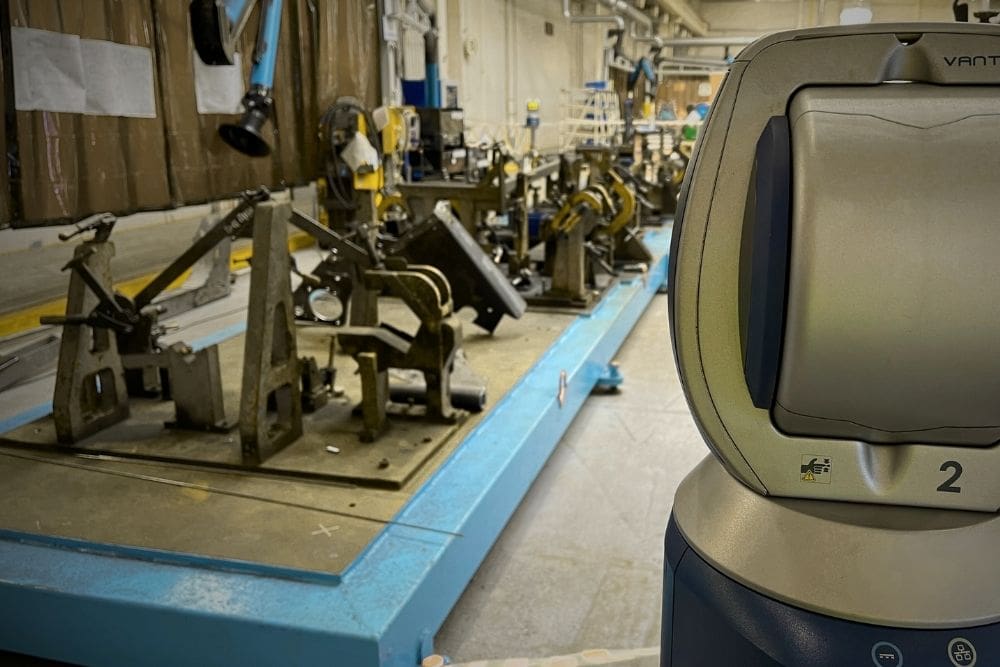
During one of our projects, our goal was to align the welding instrument to ensure its optimal operation. We started the process by leveling the entire device – only when the ideal level was achieved could we move on to correcting the alignment of individual components.
A key step was to ensure symmetry on both sides of the instrument, which in practice means that each side of the device must operate under identical geometric conditions. This ensures that the finished parts comply with quality requirements and do not require additional adjustments.
Why is alignment precision important?
-
Minimize deviations
a misaligned component can result in an inaccurate, unsightly and poorly executed weld. -
Work safety
secure attachment eliminates the risk of the workpiece moving during welding. -
Faster production
repetitive setup of workpieces reduces preparation time for welding. -
Lower costs
fewer revisions and rejections mean savings in materials and time.
Technology in the service of precision
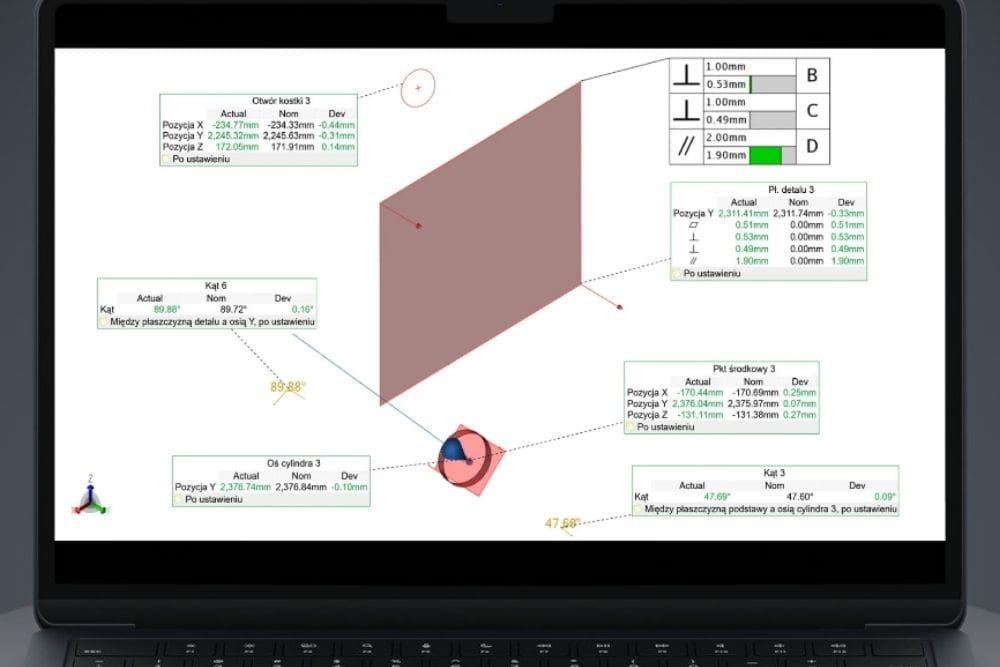
We used two Laser Trackers and a measuring arm for the job, which allowed us to achieve the highest possible accuracy and full control over the alignment process. You can learn more about these devices on our other pages and blog excerpts:
Customer benefits
A properly adjusted welding instrument is:
-
higher quality of the finished product,
-
Meeting stringent production standards,
-
Less risk of rejections and corrections,
-
The stability of welding processes in the long run.
Precise alignment of the jig is an investment in the reliability of the entire production process. If you use welding jigs in your plant – it is worth taking care of their geometry before problems arise.
Thanks to the experience of the TREON team and the use of modern measuring tools, our clients ordering the service receive full confidence in the quality of workmanship.
If you are facing a similar challenge – contact us.