


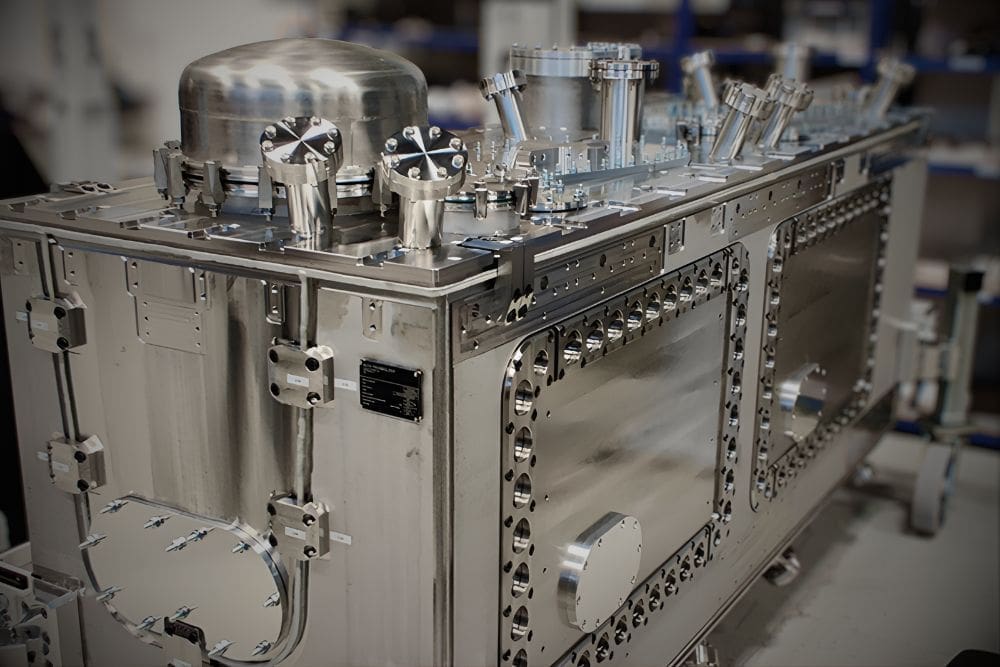
Measuring the thermal shield of the cryomodule – a component for CERN applications
Thermal shielding used in advanced research equipment performs a much more demanding function than standard industrial enclosures. In the case of cryomodules used in CERN projects, such as Double Quarter Wave (DQW) and RF Dipole (RFD) systems, among others, the thermal shield is a key element in ensuring the stability of the entire system’s operation.
Its task is not only to protect components, but also to reduce heat flow and maintain proper operating conditions for superconducting components.
In one realization, we carried out a precise measurement of a heat shield designed for this type of application.
The importance of heat shield geometry
Unlike typical industrial shields, in this case, the accuracy of manufacturing has a direct impact:
- The correctness of the assembly in the cryomodule,
- Preservation of appropriate technological gaps,
- thermal insulation efficiency,
- Compatibility with components such as resonant cavities, cooling systems or connections.
The heat shield in this type of system acts as a radiation barrier and an intermediate cooling element, limiting heat input to areas operating at cryogenic temperatures.
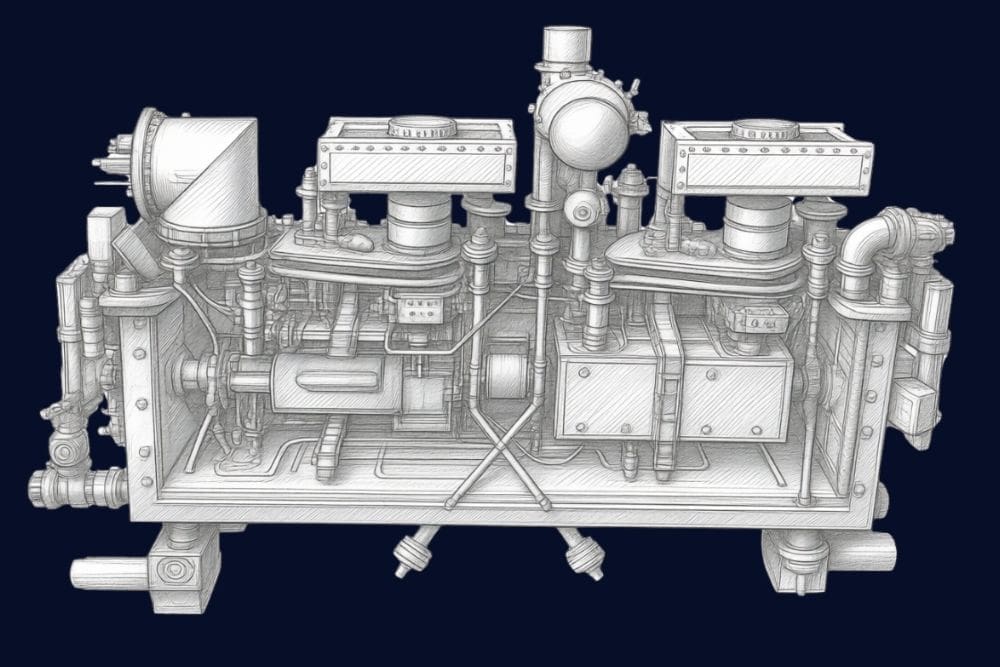 Scope of survey work
The purpose of the implementation was to check the dimensions and verify the conformity of the fabricated cowl with the CAD model provided by the customer.
The scope included:
- wall flatness measurements,
- control of surface geometry,
- Determination of the position of holes and mounting elements,
- functional detail measurements,
- Analysis of deviations from the documentation.
Particular emphasis was placed on the accuracy of the positioning of components that affect the subsequent assembly in the cryomodule.
Measurement challenges
During implementation, typical difficulties for this type of construction arose:
- limited access to selected areas,
- small bore diameters,
- Large size of the component and measurement from all sides,
- The need to maintain high accuracy despite the complex geometry.
The appropriate selection of a measurement strategy and the use of various methods made it possible to collect complete data.
 Analysis and technical report
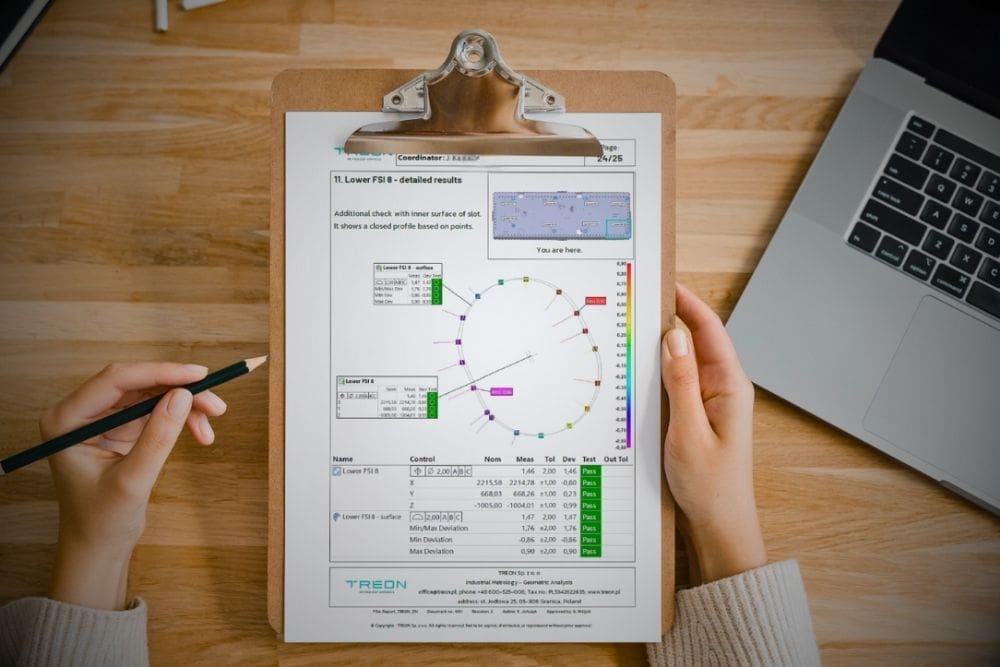
Based on the measurements taken and the CAD model, we prepared a detailed report including:
- Geometric deviation analysis,
- Comparison of the actual geometry with the design,
- accurate hole positions,
- Visualizations to help interpret the results.
The report was produced in PDF format and formed the basis for further design and installation activities.
Effect of implementation
After taking measurements, the client obtained:
- full information about the geometry of the heat shield,
- precise data on the location of functional elements,
- The ability to verify the fit to the cryomodule,
- basis for assessing compatibility with protected components.
For advanced applications such as cryomodules for particle gas pedals, the control of component geometry is critical to the correctness of assembly and the stability of operation of the entire system.
If you are facing similar tasks in your company, call us for a ready-made solution. Please visit our contact page .
Source Materials: