TREON is a leading provider of 3D geometry measurement services in the industrial sector. Combining highly experienced and skilled engineering staff and the best equipment available, we provide you with analysis and engineering data quickly, accurately where traditional measurement methods are not feasible.
We specialize in geometric analysis of existing industrial facilities, installations and mechanisms.
Our services, are a combination of:
We provide 3D measurement services such as: alignment corrections of production machines, alignment of shaft lines, leveling of industrial structures, bringing parallelism and perpendicularity, precise measurement and analysis of geometry (from 0.01 mm!)
We measure large-size objects such as: entire interiors of hydroelectric power plants, ball mills for milling raw material, metallurgical furnaces, rolling cages, hydraulic presses and injection molding machines, bodies of large machines, turbogenerators, crane running systems, and many others (objects up to 80 meters)
We carry out metrology-grade laser measurement services for industrial, mechanical engineering, heavy industry, manufacturing or processing. If you need to precisely and accurately align machine components, measure or monitor the condition of large-scale objects, our solutions are just for you.
The volumetric uncertainty with which we can make measurements is given by the formula 20μm + 5μm/m. Which means that a detail from 10 meters in length will measure with an uncertainty of no more than 0.070 mm! This is the maximum permissible error while the correct so-called “error” is the maximum permissible error. typical error does not exceed 0.049mm (according to ISO 10360-10:2016)
This range of measurement uncertainty, combined with the experience of our engineering staff, allows us to carry out the most demanding projects in industries where precision plays a key role (energy, aerospace, precision machining, manufacturing).
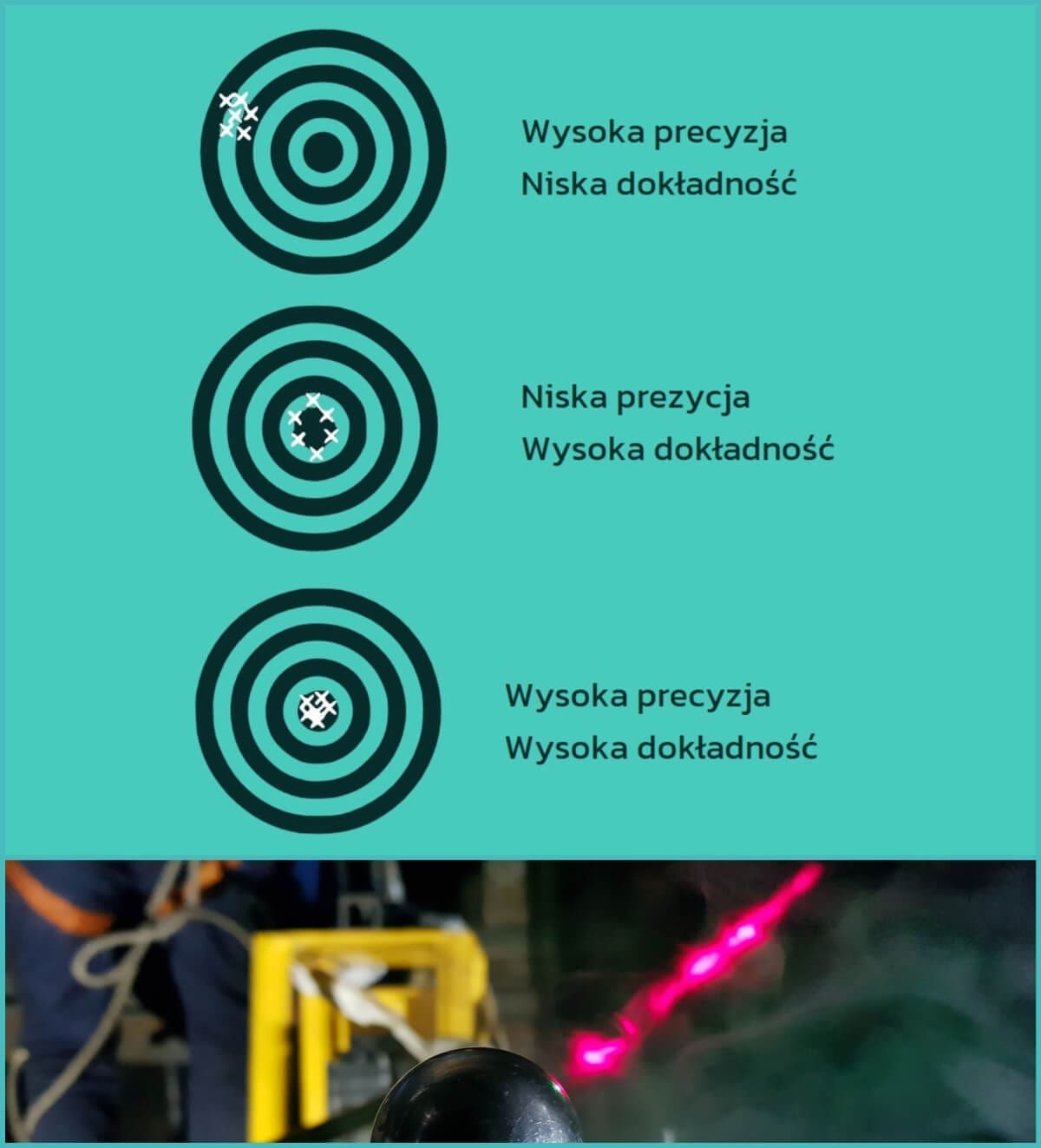
Precision and accuracy are two ways scientists think about errors. Accuracy refers to how close the measured value is from the actual value. Precision refers to how close the measurements of the same characteristic are to each other. Precision is independent of accuracy. This means that it is possible to be very precise but not very precise, and it is also possible to be precise without precision. Top quality measurements are accurate and precise.
The classic way to demonstrate the difference between precision and accuracy is with a dartboard target (examples are included in the graphics to illustrate what accurate and precise measurement looks like. Being aware of these principles, we carry out our services with high precision as well as accuracy.
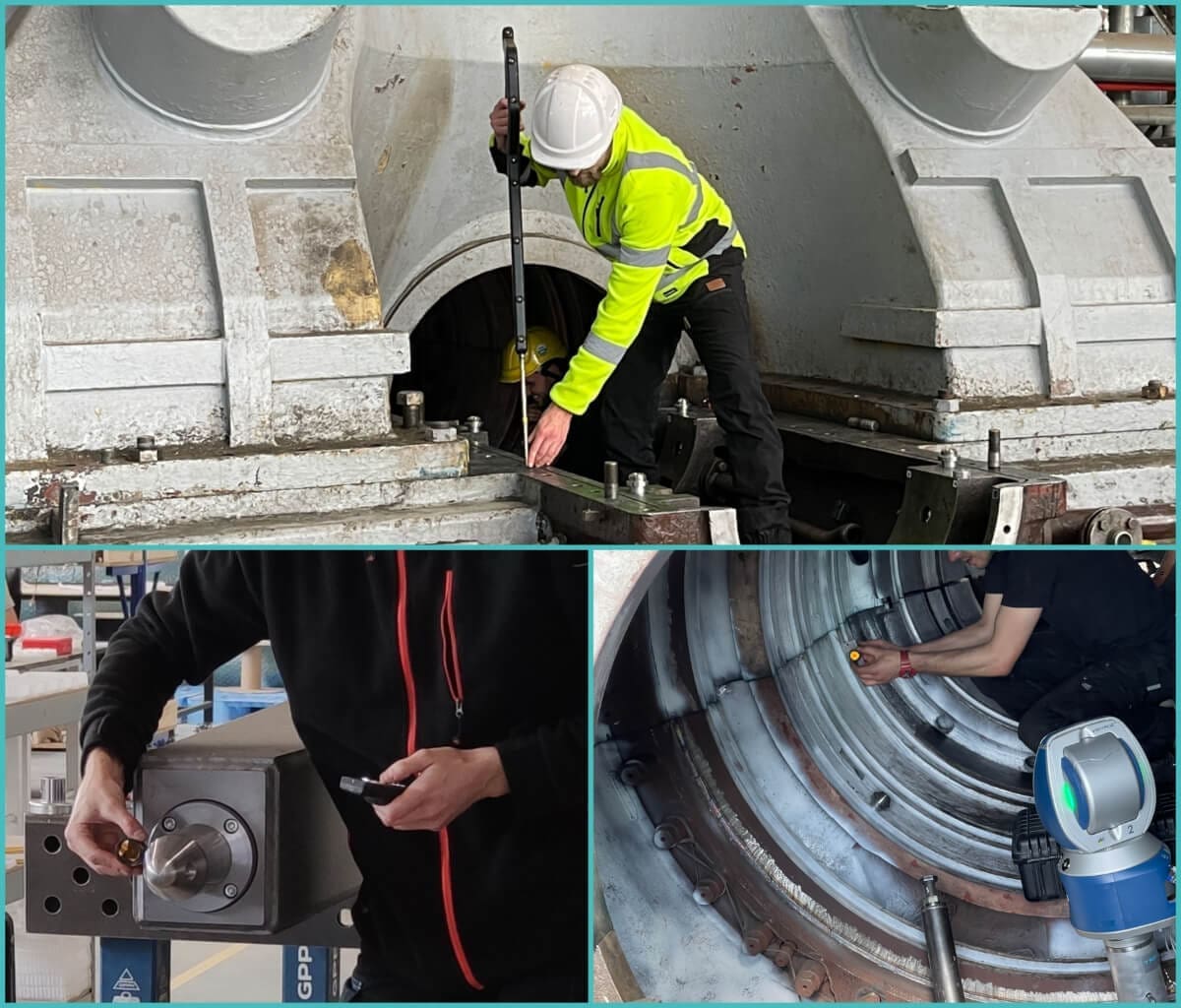
TREON is a group of engineers and new technology enthusiasts providing high-tech and precise measurement services. We support industries and factories providing precision measurement data and geometry analysis. Our activities are significantly improving the performance of process lines. We participate in the execution and acceptance processes. We also conduct random inspections of products supplied by subcontractors.
We have accumulated measurement knowledge through years of work in machining, metrology and heavy industry. Our experienced operators are not afraid of steel mills, foundries, power plants or shipyards. Working at heights or in tight industrial spaces, as well as inside hydropower plants, is a daily occurrence for us.
In our work, we combine the latest technologies of laser tracking(Laser Tracker), measurement software(PolyWorks 2022) so as to ensure effective implementation of projects entrusted to us and at the same time provide reliable services with high accuracy and repeatability.
To minimize production downtime, our team of operators is available to work in shifts. We are also not afraid to travel to the farthest corners of Europe. We carry out projects throughout the old continent but are also available outside the European Union.
Engineering large-scale structures and machinery such as turbine generators, metallurgical furnaces, hydraulic presses, ball mills, and rolling cages requires precise and, above all, competent measurements. The efficiency of a power plant, manufacturing plant or factory that processes raw materials depends mainly on these devices.
One of the causes of excessive wear of machine components is their imprecise alignment, deviating from the nominal values assumed by the designer. In order for them to function properly, it is necessary to maintain adequate distances between the various components of the machine, so that together they can work together harmoniously.
As experienced engineers trained in a wide range of technologies, we have extensive experience in industrial measurement and geometric analysis, which greatly improves the reliability of machine and mechanism operation.
Measurement and continuous control primarily protect factories from unplanned production stops. They also enable better service planning, avoiding design errors during overhauls , faster start of production. Prevention is the best way to avoid unforeseen costs resulting from failures.
By accurately measuring production machinery, we can achieve significant improvements in the quality of final products and also longer uninterrupted operation of process lines. Detecting errors in the geometry of running machines in time will prevent breakdowns and the machines themselves will run longer due to more precise operation and lower mechanical wear on parts. Greater machine durability over the long term means profit by avoiding unexpected downtime and repair and service costs.
Properly performed measurements and detailed analysis will ensure smooth production, improve processes, increase efficiency and ultimately significantly improve the life of machinery.
Misalignment, lack of geometry control, loss of alignment, settling foundations. Inherent in these factors are risks that we can eliminate for you, point out the solution and remedies.
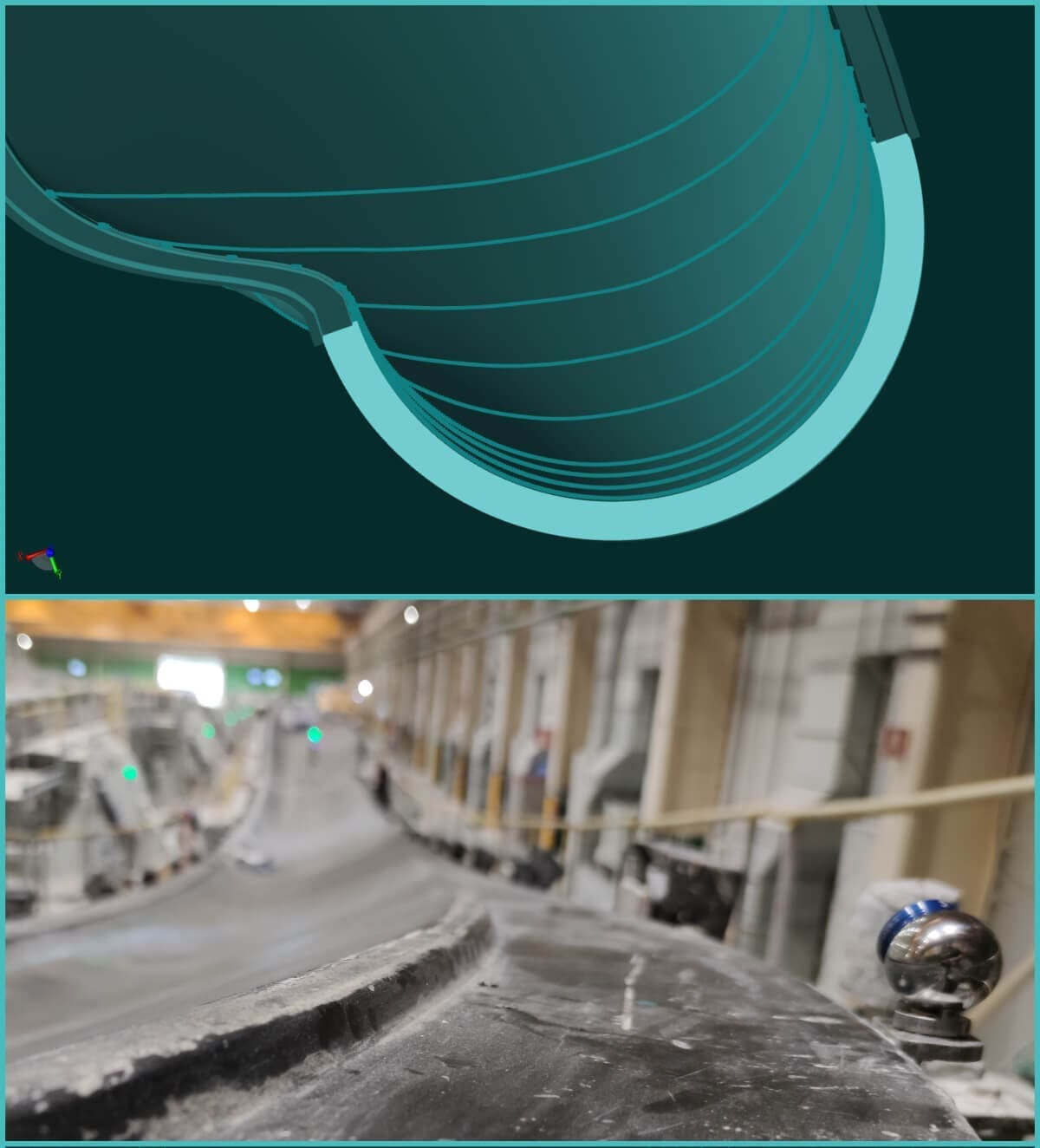
Almost any measurement is possible and the limitation is the time to prepare and execute the task. Straightness, concentricity, flatness, leveling to gravity, perpendicularity, parallelism, alignment of rotating fixtures or measurements relative to a 3D model are just a few of the tasks we can perform.
Although the device itself has visibility (laser beam) limitations, we can combine data from a single laser tracker with other equipment such as survey arms, long-range laser scanners, or use multiple device positions.
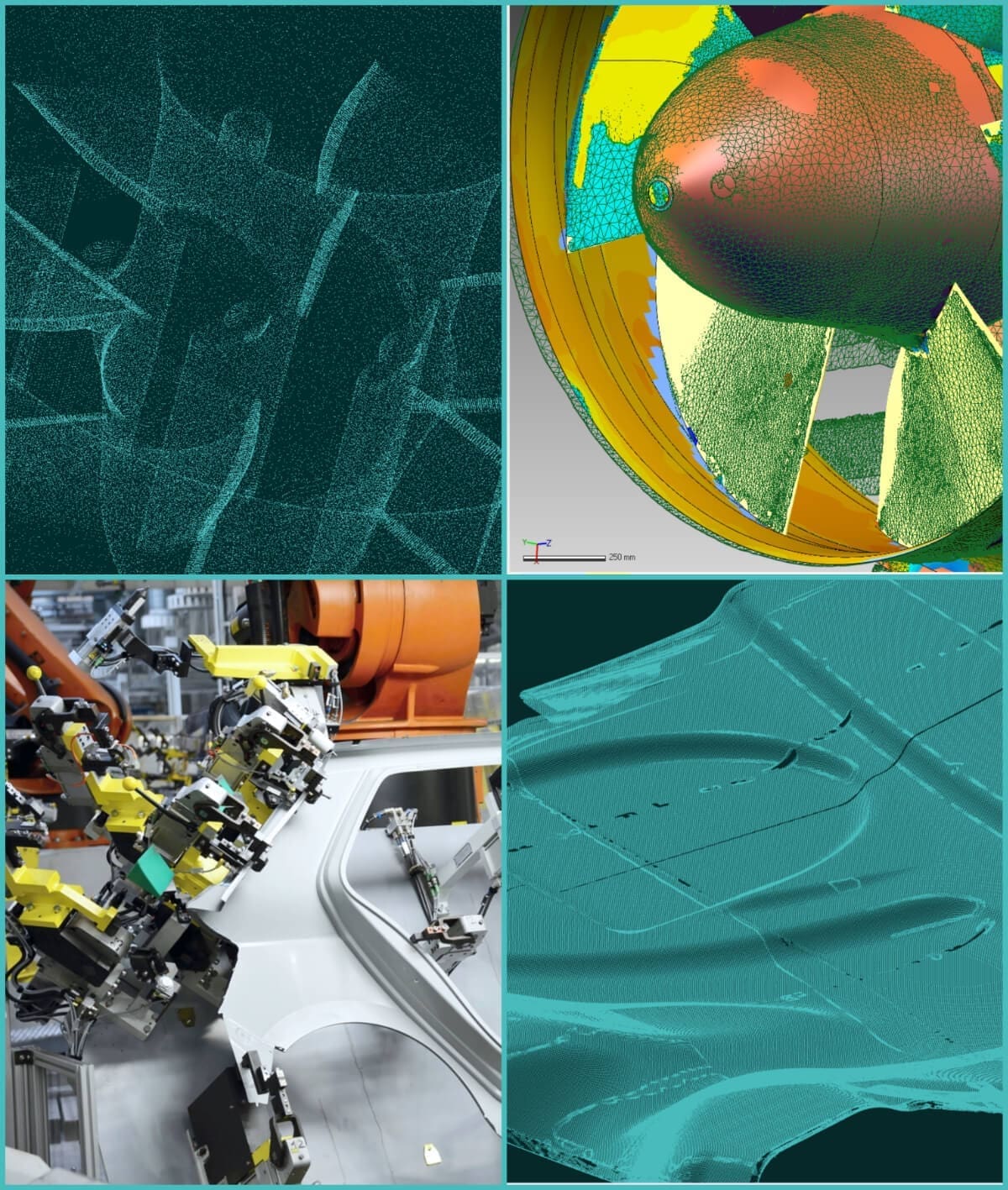
If you have 3D CAD models (e.g., igs, stp) of your machine, equipment or structure, we can also compare the raw data directly with the nominal surfaces of the model and provide detailed color maps highlighting and measuring curvilinear surfaces. If you don’t have a CAD model, we can create one for you or provide the necessary data so you can start reverse engineering on your own.
Another limitation associated with laser trackers is the amount of information collected that is obtained by physically touching an object with a probe. In some cases, we combine long-range laser scanning (point clouds) with laser tracking so that we can get a complete geometry of the object and measure at much longer ranges (more than 120 m).
In the past, Laser trackers were used to die in the aerospace industry, today we use this technology in an almost very diverse industry.
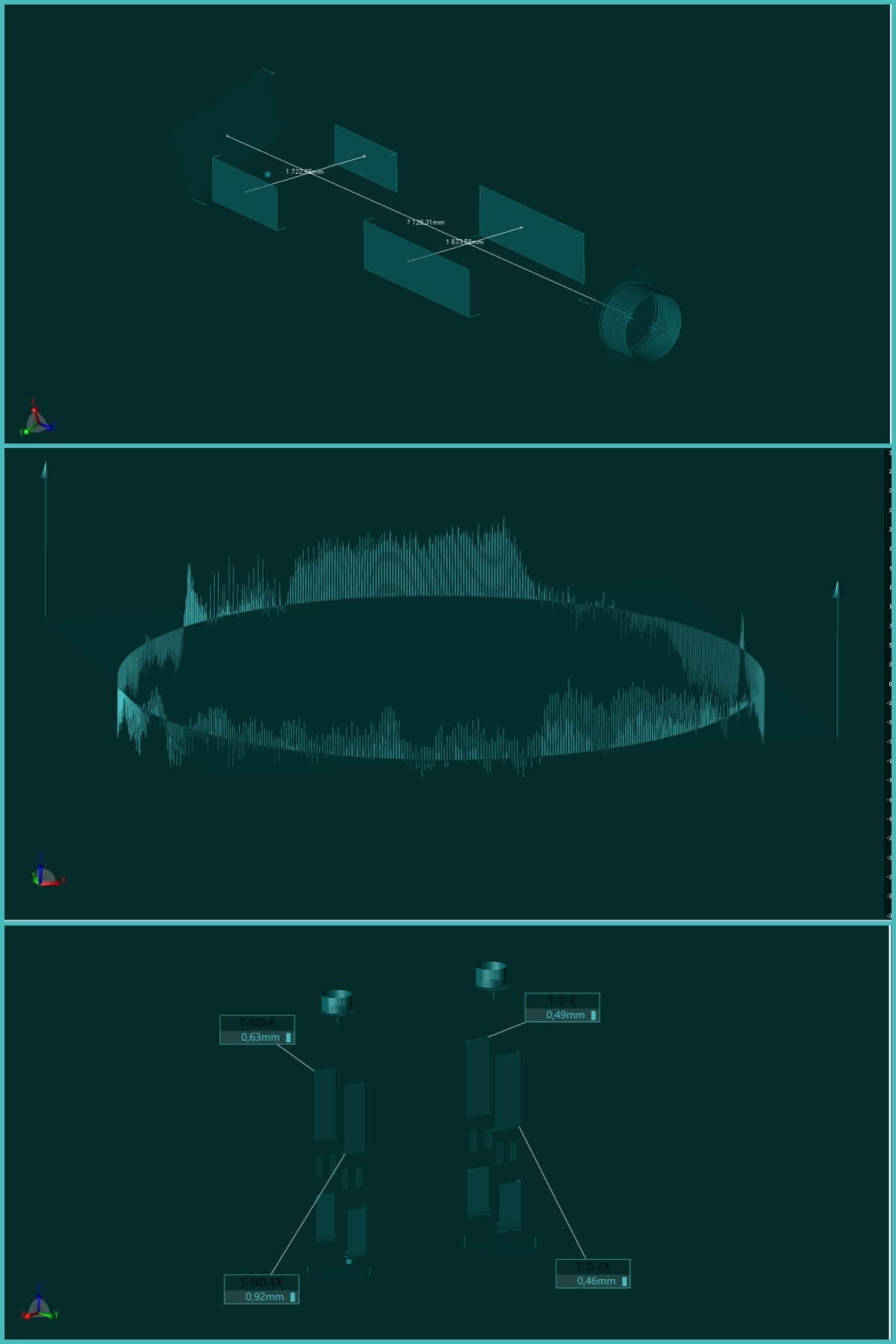
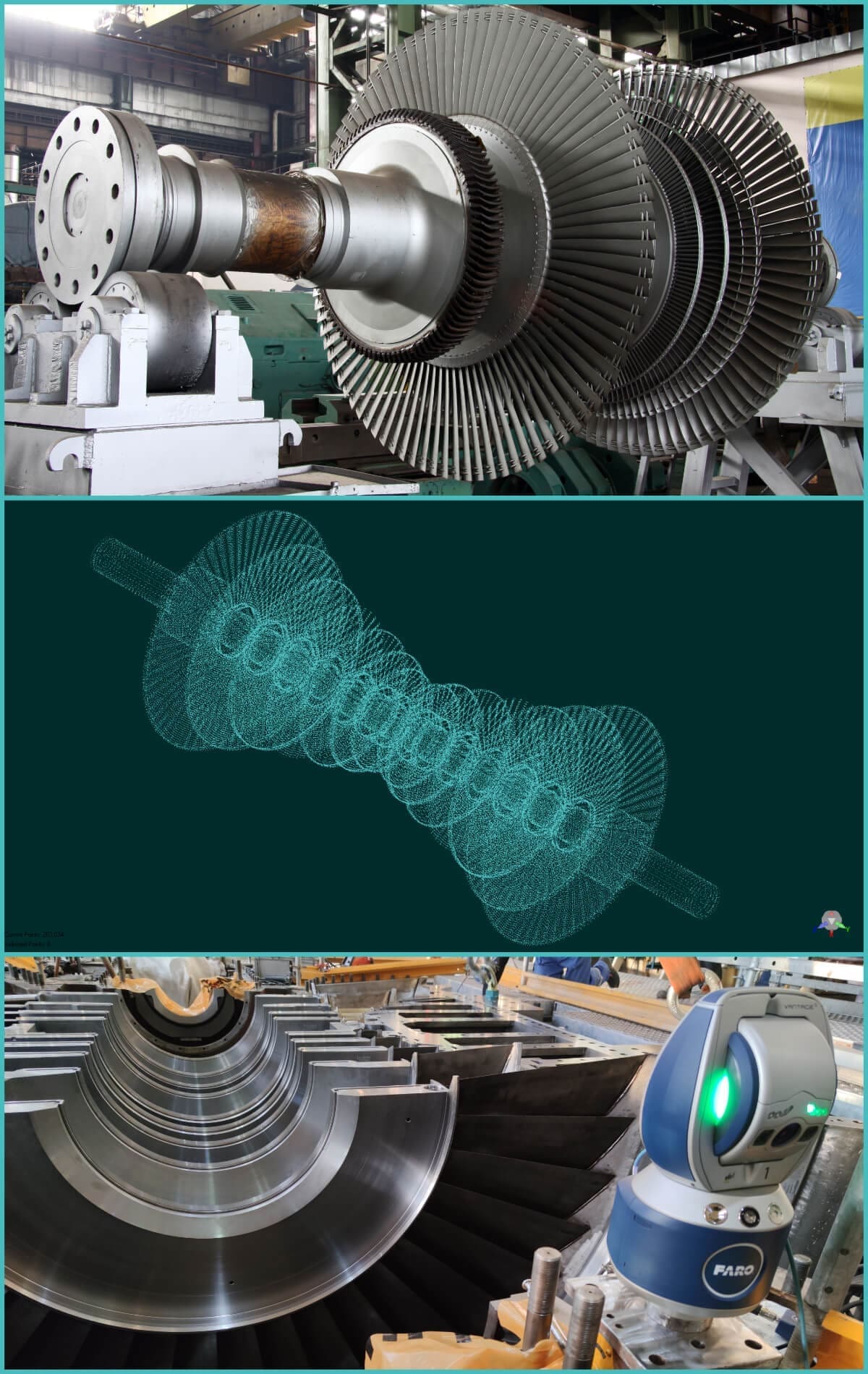
Laser trackers (Laser Trackers) are ideal for aligning and inspecting large rotating equipment such as steam turbines. Precise basing and alignment of turbine components is critical to the life, performance and efficiency of the turbine unit. Measurements of rotor blades (including clearances relative to the body) and position and clearances are also possible.
Continuous processes, such as paper making, sheet drawing or wire drawing and coating, require equipment to be aligned very precisely with each other. All this to prevent product quality problems and minimize waste. Our alignment services can quickly help you achieve or verify the correct alignment of production machine parts (shafts, cylinders, scrapers, suction components, slicer components, separators, pulpers, motors, etc.).
Large-scale rotating equipment is subjected to high speeds and loads. Correct alignment of rotating parts is key to preventing excessive vibration and ensuring proper operation. Destroyed bearings or couplings are the first symptom of misaligned rotating structures such as ball mills, sugar mill lasers, rotary dryers, grinding mills for milling raw materials, and screw conveyors for bulk materials.
Our operators can help inspect and correctly set up such equipment to ensure the best possible performance and reliability. We make such measurements in real time, which allows us to regulate and adjust the process correctly. For such services, we will prepare an input and output report that shows the changes made.
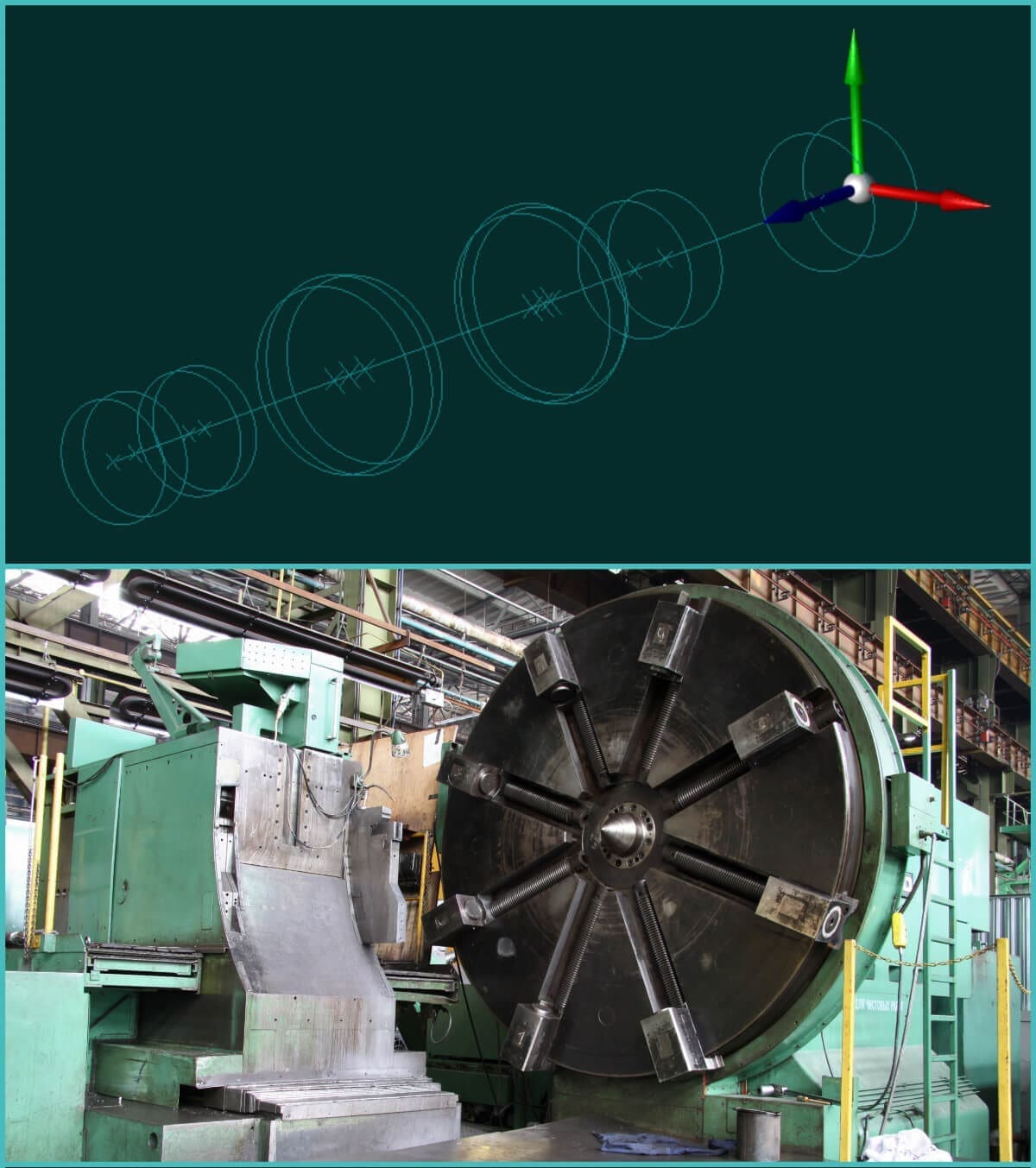
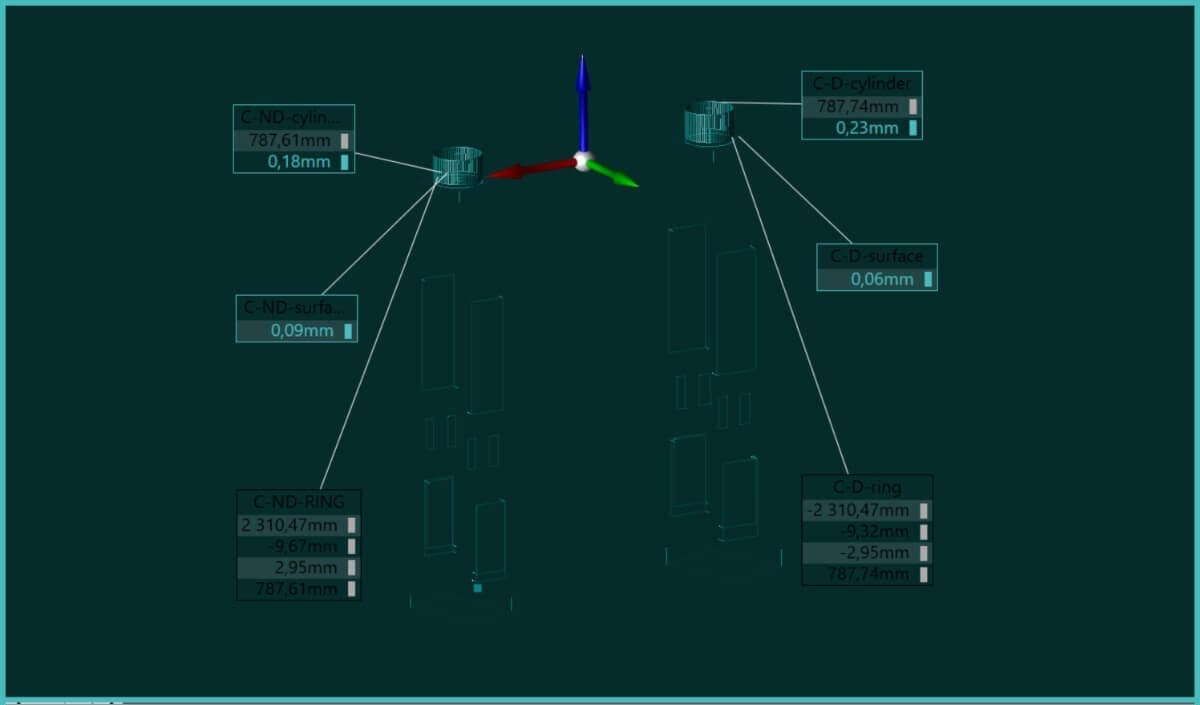
The trackers are so precise that they can be used to monitor the transformation over time (drift monitoring). The service to check the settlement of the structure makes it possible to make adjustments in time so as not to disrupt the process and avoid unplanned stops in production . We can compare the digital metrology data with historical and future data to help define the problem and implement countermeasures.
We can extend such measurements to analyze deformation over time or under temperature changes. Checking how a large machine or industrial structure changes position over time is crucial when planning repairs to prepare and implement a repair plan in advance. We are also able to measure structures at different times of the year so that we can understand actual seasonal changes in size and shape or detect potential creep and deformation.
Given the laser tracker’s high level of accuracy, it is an excellent measuring device for use in reverse engineering larger machine and equipment parts. Combined with data from the 3D skner, we can create input data for reverse engineering or perform modeling of the finished part.
All our engineers are familiar with one of several CAD packages to create CAD models and technical drawings as required. Perhaps you have machinery or equipment for which there is a lack of technical documentation or you need to produce a spare part not available on the market. We have the metrology facilities, knowledge and software to help you perform reverse engineering of your geometry.
Complex production processes require precise machine settings to maintain the required quality indicators and short machine downtime. In our services, we are able to improve the alignment of production equipment such as welding robots, conveyors, and other robotic stations.
A typical example is a robot that makes systematic positioning mistakes. By comparing several robot positions based on localization using our equipment, we can build a mathematical correction model for the robot, which effectively removes bias and significantly improves the robot’s precision.
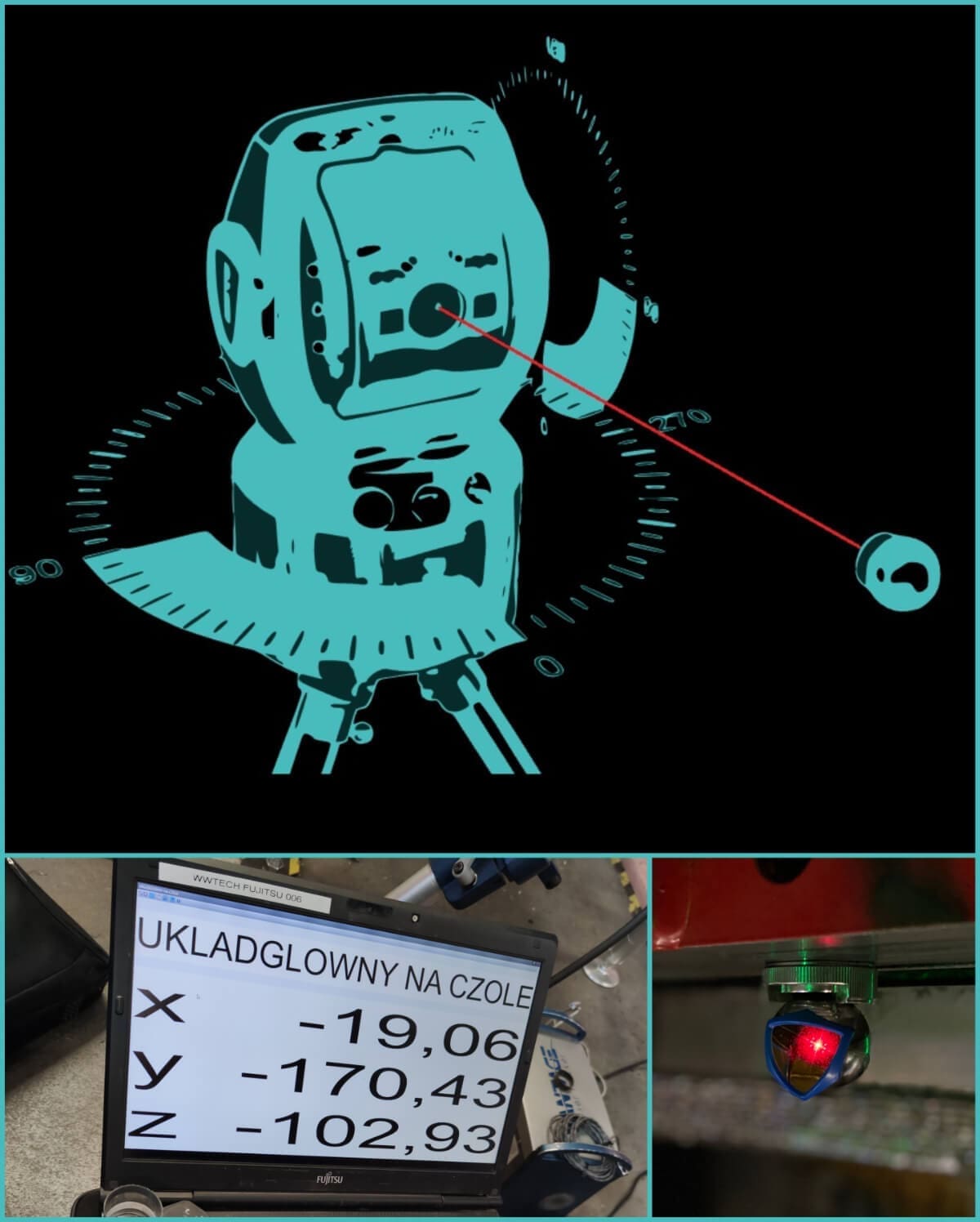
The first Laser Tracker was invented in 1987 by Dr. Kam Lau, CEO of API (Automated Precision, Inc.) while working at the National Institute of Standards and Technology and made commercially available by the company in 1988. The first unit was made available to Boeing under a nine-month lease agreement. Currently, there are three well-known laser tracker manufacturers; FARO, API and Leica.
Laser Tracker is a high-precision laser measuring tool used to measure large dimensions (0 m – 80 m). For large facilities, it is the best available technology for inspection and measurement where high precision is required. The devices are capable of measuring to an accuracy of 0.025 mm over a distance of several meters.
The tracker consists of a head that uses a precision laser rangefinder in combination with 2 rotary encoders. By measuring the distance and two angles, the coordinates of the measuring point can be calculated in a spherical coordinate system. Distance measurement is carried out with very high precision (16μm + 0.8μm/m). The measurement of angular head accuracy can be described by the formula (20μm + 5μm/m).
The angles from the encoders and the distance from the datalogger are sufficient to precisely locate the center of the retroreflector (Spherically Mounted Retrorflector). . SMRs are very precisely made sphere-shaped probes that we apply to a physical object. The device collects information about the position of the sphere in 3D space and sends it to the measurement software. Since the center of the retroreflector is always displaced by a fixed distance relative to each measured surface (the radius of the sphere), you can calculate the coordinates of surfaces or points by knowing the projection vector of the points.
Using the collected points in the measurement software, we create features such as planes, cylinders, spheres, etc. This allows us to determine distances, angles or parallels between elements. The quality of the software that calculates the data plays a key role here. Calculations must be performed in accordance with the applicable norms and metrological standards.
Laser trackers can be rented from several sources (including from our company). For those who are proficient in the art of inspection, this may be the most sensible solution.
On the other hand, for customers who are not very familiar with trackers and are inexperienced in using the devices, it is important to remember that measurement techniques appear simple, but in reality are often applied incorrectly. In addition, data analysis requires experience and many years of practice to correctly interpret the information obtained during measurement.
All our employees are trained and qualified operators. In our company, we want to provide customers with the best service available in the fastest possible time. If your business needs require precise measurements of large objects, please contact us for a quote!