


What are industrial machinery measurements?
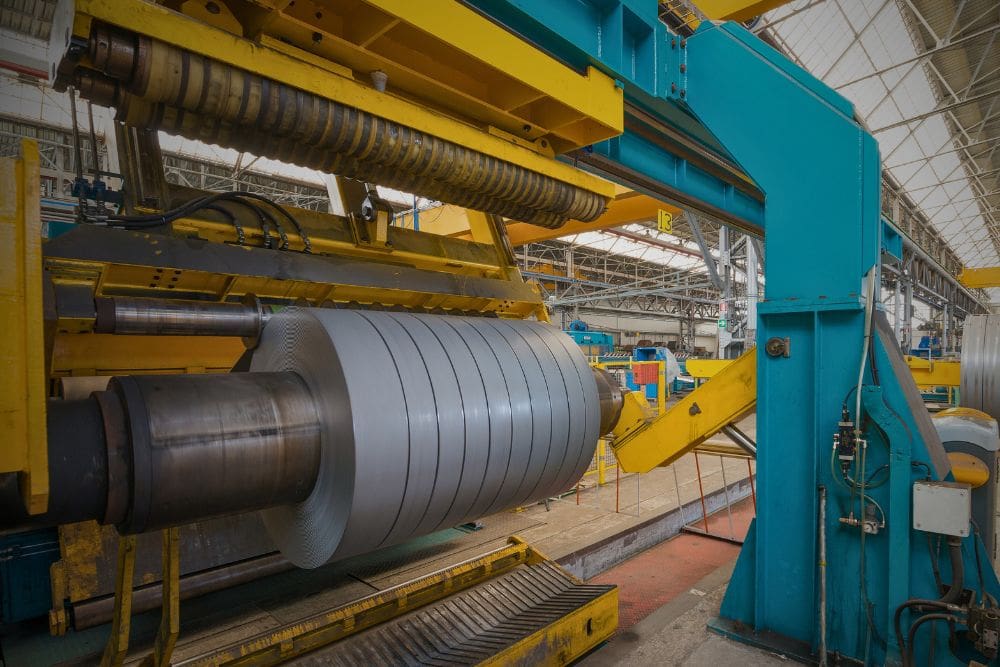
Industrial machinery is mechanical, electrical, electronic or hybrid equipment that is used to process raw materials, manufacture products, package, assemble and perform other industrial tasks. These machines are widely used in all industrial sectors, such as manufacturing, energy, transportation, chemicals, pharmaceuticals, food and many others.
Industrial machinery can include different types of equipment, such as:
- Machining machines: lathes, milling machines, drilling machines, machining centers and others that are used for machining.
- Production machinery: e.g. hydraulic and mechanical presses, extruders, press brakes, injection molding machines.
- Transport equipment: overhead cranes, conveyor belts, which are used to move materials inside the production facility.
- Industrial automation: industrial robots, conveyors, feeders that automate production processes.
- Packaging and cutting machines: polystyrene cutting, labeling, unwinding and material cutting machines that are often used in the food, pharmaceutical and other industries.
- Machinery for energy production: steam turbines, water turbines, windmills, electric power installations that are used to generate electricity.
Industrial machinery is a key component of modern manufacturing, helping companies increase the efficiency, precision and automation of their production processes. Their proper operation depends on many factors. One of them is to maintain the correct alignment, geometry and dimensions.
What can be studied in industrial machinery in a geometric context?
- Dimensional accuracy: Evaluation of the conformity of the actual dimensions of machine components with their design values (lengths, widths, heights, angles and other relevant dimensions)
- Shape: Verify that the various components of the machine are straight, flat and parallel, according to design requirements.
- Location: Analysis of the position of various elements relative to each other. It is important that the components are placed in the correct positions and in accordance with the design tolerances.
- Deformations: Study of possible deformations that may occur during machine operation and their effect on geometry.
- Tolerances: Evaluating compliance with tolerances specified in designs, such as dimensional, shape, position tolerances.
- Concentricity: Check that rotating components are properly seated and there is no axis misalignment.
- Surface Geometry: Analyze the surface quality of components, especially where they are in contact with each other, such as seals and rebates.
- Parallelism and Perpendicularity: Check that important elements are parallel or perpendicular to each other when required.
If you want to find out how we can help you with projects where machine geometry analysis is required: contact us HERE.